by Fmeaddons
Chani Cohen ZadaLet Thine Eyes be on the Field
Chani Cohen Zada, Let Thine Eyes be on the Field
About the Artwork
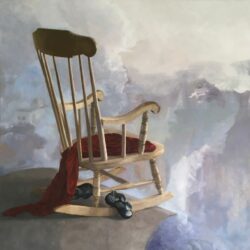
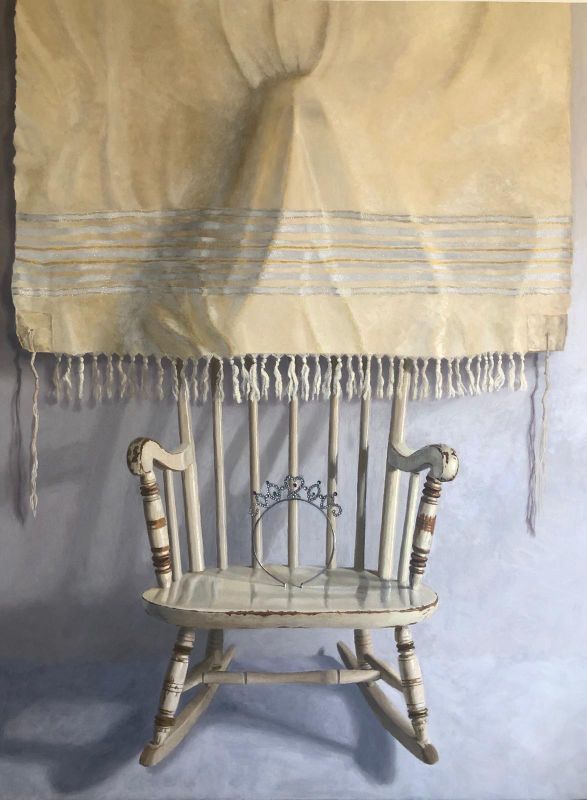
Let Thine Eyes Be on the Field takes its title from Boaz's words to Ruth: "Let thine eyes be on the field that they reap..." (Ruth 2:9). A prayer shawl hangs gracefully above an empty rocking chair, its fringes gently descending toward the seat below. Though no human figure is present, the composition is filled with quiet expectation. Through these familiar objects, Chani Cohen Zada reflects upon Divine guidance, faith, and the unseen presence that accompanies those who place their trust in Hashem.
Continue reading
The Book of Ruth tells the story of quiet acts of kindness that ultimately shape Jewish history. When Boaz invites Ruth to keep her eyes upon the field where his workers harvest, he offers not only physical protection but also dignity, belonging, and hope. His words become an expression of Divine providence working through human compassion.
Cohen Zada translates this biblical moment into symbolic form rather than literal illustration. The empty rocking chair suggests a human presence without depicting a particular individual. Throughout the artist's work, chairs often evoke memory, waiting, and the unseen lives that continue to inhabit familiar spaces. Here, the chair quietly becomes Ruth herself—waiting with faith for the future that Hashem is preparing.
Suspended above the chair is the tallit, its fringes cascading downward like a protective canopy. The garment recalls both prayer and Divine shelter, suggesting that true security comes not merely through human effort but through trust in Hashem's guidance. The gentle relationship between the chair and the tallit evokes the feeling of being spiritually embraced.
The restrained composition allows every object to carry meaning without becoming overly symbolic. The empty space surrounding the chair is as important as the objects themselves, inviting viewers to contemplate what cannot be seen: providence quietly unfolding behind ordinary events. Just as Ruth could not yet perceive the future awaiting her, we too often recognize Hashem's guidance only in retrospect.
Let Thine Eyes Be on the Field ultimately speaks of faith, patience, and redemption. Ruth's journey would lead to her marriage with Boaz and ultimately to the birth of the Davidic dynasty. The painting reminds us that lives transformed by quiet acts of kindness and steadfast trust become part of a story far greater than themselves.
₪ 36,750
In stock