Chani Cohen Zada
View All Worksby Fmeaddons
Chani Cohen ZadaEzrat Nashim
Chani Cohen Zada, Ezrat Nashim
About the Artwork
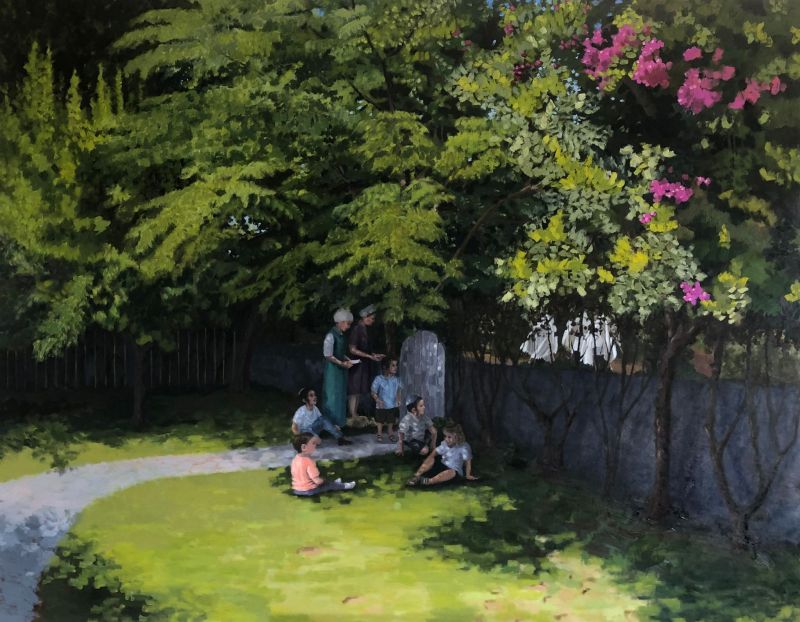
Ezrat Nashim captures a quiet moment within a garden-like setting. Seated beneath the shade of trees and surrounded by abundant foliage, women and children gather in a space of tranquility. The title, meaning "Women's Section," evokes the areas traditionally designated for women within Jewish places of worship, yet the painting expands this idea beyond architecture, presenting a sanctuary created through nature, community, and faith.
Continue reading
Rather than depicting a formal synagogue interior, Cohen Zada places the scene outdoors, where sunlight, shade, and vegetation become active participants in the composition. The natural setting softens the boundaries between the physical and spiritual worlds, suggesting that prayer and connection to Hashem can flourish wherever sincere hearts gather.
The figures are intentionally understated. Their presence is quiet and unassuming, allowing the atmosphere of the scene to speak as powerfully as the individuals themselves. This restraint reflects the artist's broader interest in observation and attentiveness. The painting invites viewers to notice not only the people, but also the interplay of light, shadow, and space that surrounds them.
The title also points to the unique role of women within Jewish communal and spiritual life. Throughout history, women have sustained homes, traditions, and communities through acts of devotion often carried out away from public attention. The peaceful gathering depicted here serves as a tribute to those quiet expressions of faith that shape generations.
The lush vegetation surrounding the figures creates a sense of protection and intimacy. The trees form a living canopy, transforming the space into a natural sanctuary. Within this sheltered environment, prayer becomes less an isolated act and more a conversation woven into the rhythms of daily life.
Ezrat Nashim ultimately speaks of community, reflection, and spiritual presence. It reminds us that sacred spaces are not defined solely by walls or buildings, but by the people who gather together in search of meaning, connection, and prayer.

