by Fmeaddons
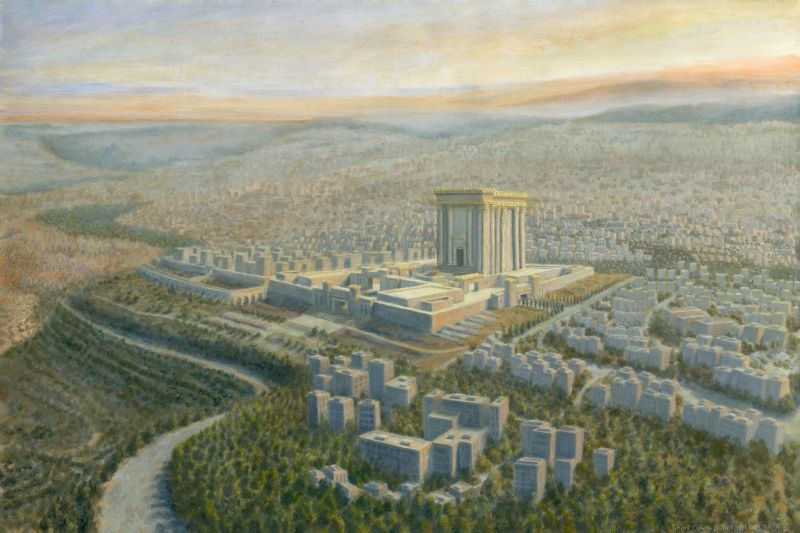
Chani Cohen Zada, B’Har Hashem Yera’eh (Bereishit 22:14)
About the Artwork
B'Har Hashem Yera'eh envisions Jerusalem in the era of the Third Temple, inspired by Avraham's declaration following the Binding of Isaac: "BaHar Hashem Yera'eh" — "On the mountain, Hashem will be seen." The painting presents a future Jerusalem where spiritual clarity and physical beauty exist in harmony. At the center stands the Holy Temple, radiating purpose and meaning, while the surrounding city reflects both renewal and continuity. More than a vision of architecture, the work is an expression of hope, faith, and the enduring Jewish longing for redemption.
Continue reading
Following Akeidat Yitzhak (the Binding of Isaac), Avraham names Har HaMoriah "Hashem Yireh" — "G-d will see." The Torah further explains the name with the phrase "BaHar Hashem Yera'eh" — "On the mountain, Hashem will be seen." Among the various interpretations offered by the commentators, the Kli Yakar explains that a time will come when Hashem will reveal Himself and choose this mountain as His dwelling place.
Har HaMoriah was the site of the First and Second Temples, and according to Jewish tradition it will also be the site of the Third Temple, for whose rebuilding we pray daily. The Sages describe Jerusalem during the Temple era as possessing a beauty that transcended physical appearance, inspiring awe through its spiritual presence and sense of divine purpose.
In this painting, Chani Cohen Zada imagines that future reality. Lush forests surround the city, while contemporary buildings rise in the distance, acknowledging the Jerusalem of today. Yet all attention is ultimately drawn toward the Temple itself, standing at the center of the composition. The ascending offerings symbolize the renewed connection between heaven and earth that lies at the heart of the Temple service.
The Temple structure is based on the architectural plan created by Baniyahu Dayan Tzedek, builder of the Temple model at Mini Israel, drawing upon the prophetic vision described in the Book of Ezekiel. The surrounding landscape is inspired by the view from Mount Scopus, transformed through the artist's imagination and heartfelt prayers for Jerusalem's future.
Ultimately, the painting speaks not only of a rebuilt city, but of a rebuilt world. Jerusalem in the era of the Third Temple will not merely be more beautiful—it will be clearer: clearer truth, clearer connection, and clearer purpose.
₪ 126,000
In stock